Release 02 video analysis
USO formation video: inside the Release 02 PR052 mission clip
Direct Record Summary
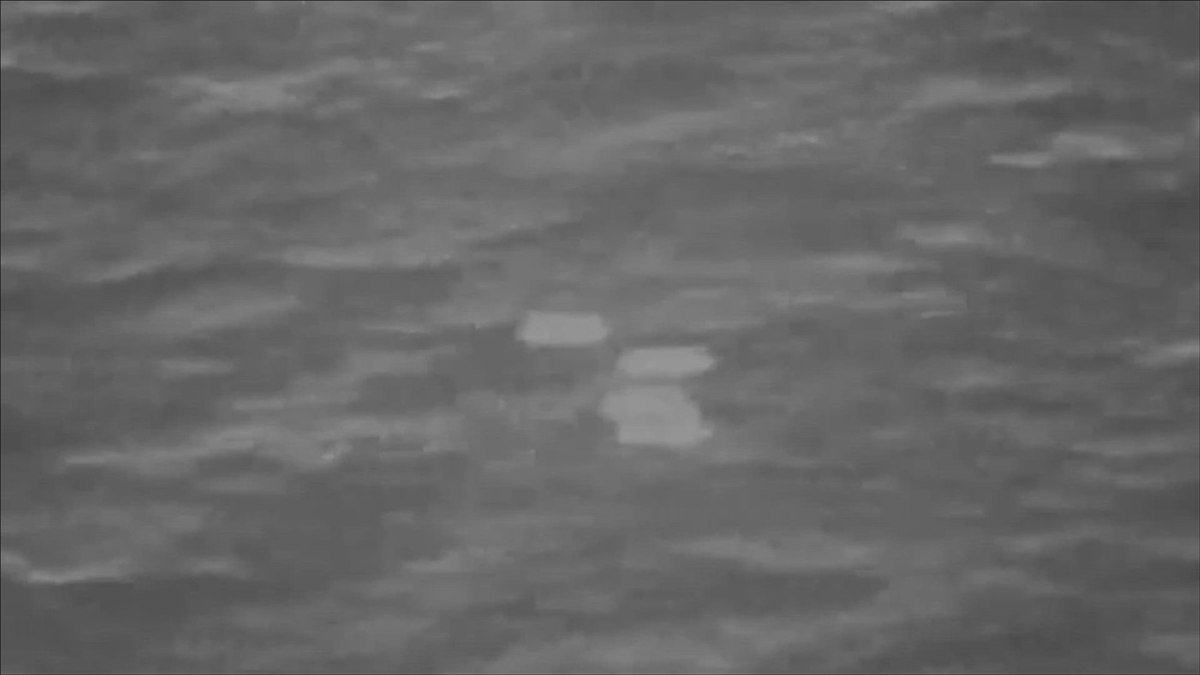
DOW-UAP-PR052 is one of Release 02’s more watchable formation clips. The official DVIDS page labels it “UAP USO Formation [CALLSIGN] (Mission)” and describes infrared-derived footage from a U.S. military platform, uploaded to a classified network in June 2024. The visible subject is not a single flash. It is a repeated four-object pattern shown through cuts, contrast filters, zooms, and degrading image quality over more than eight minutes.
Official military video
The official player loads only after selection. The source link remains available for direct verification.
Source record
- Video ID
- 1007708
- Incident date
- 2024-06-01
- Runtime
- 8 minutes 15 seconds
- Location
- Undisclosed location
- VIRIN
- 240624-D-D0360-5684
- Filename
- DOD_111719718
Four contrast areas, one loaded title
The word “USO” gives this video its pull, but the valuable question is narrower and more testable: do the four areas of contrast behave like a shared formation, a group of ordinary objects moving through the same sensor view, or a processing-heavy clip that makes the grouping look stronger than the raw scene can support?
The 8-minute PR052 sequence
- 00:00-00:05 - DVIDS says four areas of contrast move across the lower third of the frame from left to right.
- 00:06-00:38 - The video appears to cut and refocus on four areas of contrast while sensor-display elements move in and out of the frame.
- 00:39-06:08 - The public file appears to cut multiple times, applying different contrast filters and zoom levels.
- 06:09-06:50 - The sensor zooms in on four areas of contrast.
- 06:51-08:10 - The areas become increasingly indistinct as video quality degrades.
- 08:11-08:15 - The video appears to cut or zoom out, likely returning to an earlier portion where the contrast areas are more visible.
Why PR052 deserves a careful read
- PR052 is stronger as a study clip than as a headline claim because the DVIDS description gives readers a long sequence, exact time windows, processing notes, and official metadata.
- The repeated four-object pattern is the main evidence hook. If the objects are unrelated, the page needs to explain why they remain grouped across cuts and zooms; if they are related, the page needs the missing geometry.
- The “USO” term is part of the uploader-defined title. The public DVIDS description does not publish water entry, water exit, depth, splash, wake, range, or underwater sensor data.
- The digital-alteration note matters because readers are watching a received media file that already went through edits before AARO identified it on a classified network.
- The public debate around birds or ordinary objects is worth mentioning because it addresses what the eye actually sees: several similar contrast areas crossing an infrared-derived view.
The useful way to watch PR052
Start with the first five seconds, then jump to the 06:09 zoom section, then finish with the degraded final minute. That path shows the core problem. The early segment gives the cleanest four-object transit. The zoom section shows how the objects hold together under closer framing. The final stretch shows how quickly the same pattern can become mushy when quality falls apart.
The title says USO; the evidence shown is still sensor imagery
USO usually pulls readers toward an underwater interpretation. PR052 should be read more carefully. The official source title includes UAP and USO, but the public description talks about areas of contrast in infrared-derived imagery. It does not give a clean waterline event, submerged track, sonar contact, wake, splash, or recovered object. That makes the title important for search and source identification, while the frame-by-frame evidence remains a formation-and-sensor question.
Why the cuts and filters are not a small detail
DVIDS says the file was digitally altered before upload to a classified network and is presented as received. Then the timeline describes cuts, contrast filters, zoom levels, and display elements entering and exiting the frame. That means the public is not watching a simple raw export. A serious reading has to separate the recurring four-object pattern from the editing choices that make the pattern easier, or harder, to interpret.
- The first transit is the cleanest starting point.
- The mid-video filter sequence is useful for inspection but should not be treated as fresh independent footage every time it changes appearance.
- The final degraded segment is useful because it shows how fragile the visual reading becomes when detail drops.
The formation problem
Formation is the right word to investigate, not the word to accept automatically. A formation reading needs spacing, relative motion, range, altitude, sensor field of view, platform motion, and frame timing. Without those, the clip still has value: it shows a repeated grouping that can be compared against birds, debris, distant aircraft, surface clutter, atmospheric effects, and sensor or compression behavior.
Why PR052 belongs beside PR050 and PR051
PR050 gives a short Iran formation sequence. PR051 gives a Syria clip built around a sudden apparent exit from the frame. PR052 is different because it gives time: more than eight minutes of a formation-style scene, with edits and filters that reveal the strengths and weaknesses of the public record. Together, the three videos are a better Release 02 entry point than a generic list of new Pentagon UFO videos.
What viewers are arguing about
PR052 is already the kind of clip that splits viewers. Some see a formation of anomalous objects over or near water. Others argue the visible pattern could be birds or another ordinary group seen through infrared processing. The public debate is useful when it stays attached to the actual footage: four recurring contrast areas, an edited file, no public range, and no published water-entry evidence.
- Formation reading: four similar contrast areas appear together across several portions of the clip.
- Bird or ordinary-object reading: grouped natural or conventional targets can look more mysterious in infrared and low-context views.
- USO reading: the title invites it, but the public description does not provide the underwater evidence needed to settle it.
What the official record shows
The official record shows a Release 02 DVIDS video labeled DOW-UAP-PR052, with an uploader-defined UAP/USO formation title, an 8:15 public video file, four recurring areas of contrast, multiple cuts, contrast filters, zooms, and an AARO source path through a classified network.
The USO label is not the whole case
The public file does not establish that the objects are underwater, non-human, coordinated, or physically connected. It also does not publish the range, altitude, sensor model, platform motion, original unaltered media, or a final AARO identification.
The records that would test the formation
The records that would move PR052 forward are the original unaltered file, platform and sensor metadata, range estimates, frame timing, environmental conditions, any radar or sonar correlation, mission notes, and the reason the uploader used the USO label.
Related records and terms
Frequently asked questions
What does the 1007708 video show?
The official record shows a Release 02 DVIDS video labeled DOW-UAP-PR052, with an uploader-defined UAP/USO formation title, an 8:15 public video file, four recurring areas of contrast, multiple cuts, contrast filters, zooms, and an AARO source path through a classified network.
Fact checkWhat does this video record NOT prove?
The public file does not establish that the objects are underwater, non-human, coordinated, or physically connected. It also does not publish the range, altitude, sensor model, platform motion, original unaltered media, or a final AARO identification.
Fact checkWhat unresolved questions remain about this UAP case?
The records that would move PR052 forward are the original unaltered file, platform and sensor metadata, range estimates, frame timing, environmental conditions, any radar or sonar correlation, mission notes, and the reason the uploader used the USO label.
Fact checkSources
- DOW-UAP-PR052 DVIDS video — Official DVIDS video page for the Release 02 UAP/USO formation mission record.
- Department of War Release 02 portal Official DoD Portal — Official PURSUE portal view showing Release 02, cleared for release on May 22, 2026. Primary War.gov link (DoD Akamai host). Non-U.S. visitors may receive 403/404 if geo-blocked; access via a U.S. connection or browse our record breakdowns.
- Department of War May 22, 2026 Release 02 announcement Official DoD Portal — Official Department of War announcement for the second PURSUE UAP file release. Primary War.gov link (DoD Akamai host). Non-U.S. visitors may receive 403/404 if geo-blocked; access via a U.S. connection or browse our record breakdowns.
- House Oversight March 31, 2026 UAP video request letter — Official House Oversight letter from Rep. Anna Paulina Luna requesting 46 UAP-related videos from the Department of War.
- Reddit discussion: PR052 birds debate — Public discussion signal around the PR052 formation clip and bird/ordinary-object interpretations; not treated as official evidence.
- Reddit discussion: Release 02 video compilation — Public discussion signal around Release 02 video highlights; useful for leads, not treated as official evidence.