Briefing
Five Eyes UAP Alliance: Allied Military Sensor Sharing
Executive Summary
Declassified multinational defense memoranda released through PURSUE unsealing directives confirm that the Five Eyes intelligence alliance—comprising the United States, the United Kingdom, Canada, Australia, and New Zealand—has established a formal, permanent UAP working group. Operating under high-level defense intelligence agreements, the allied initiative integrates global phased-array radar networks, satellite surveillance feeds, and maritime acoustic hydrophone arrays into a standardized, real-time threat evaluation architecture. The unsealed records demonstrate that military leadership across all five partner nations treats anomalous transmedium craft as a unified defense priority that transcends national borders.
Allied Defense & Global Intelligence Briefings
The official player loads only after selection. The source link remains available for direct verification.
What to know
The alliance framework establishes standardized sensor logging formats, eliminating discrepancies between national radar algorithms and facilitating automated cross-border tracking. The declassified files include joint analytical papers authored by the UK Ministry of Defence (MoD), Canada's Department of National Defence (DND), and Australia's Defence Science and Technology Group evaluating transmedium contacts operating across the North Atlantic and Pacific Oceans.
The Five Eyes Framework: Integrating Global Allied Sensor Feeds
By leveraging the world's most sophisticated intelligence alliance, partner nations have eliminated regional radar blind spots.
- RAF Fylingdales & Ballistic Missile Early Warning: Integrating UK phased-array tracking radar data into continental US and NORAD aerospace surveillance feeds.
- Canadian NORAD Sector North: Tracking high-latitude trans-polar tracks descending from orbital paths over northern Canadian territory.
- Pine Gap and Australian Over-the-Horizon Radar: Utilizing Jindalee Operational Radar Network (JORN) ionospheric tracking to detect high-speed targets over the Southern Ocean.
Standardizing the Threat Rubric: The Five Observables in Allied Doctrine
Historically, allied nations utilized disparate definitions and reporting guidelines for anomalous aerial contacts.
- Unified Classification Rubric: Formally adopting the "Five Observables"—anti-gravity lift, sudden acceleration, hypersonic velocity without signatures, low observability, and transmedium travel.
- Automated Cross-Correlation: Deploying machine-learning algorithms to flag target tracks that match anomalous kinematic profiles across multi-national sensor feeds.
- Joint Threat Assessment Papers: Producing classified quarterly assessments for allied defense ministers and military joint chiefs.
The Canadian and British Dossiers: Parallel Encounters Across Continents
The unsealed Five Eyes records highlight notable allied military encounters that mirrored US carrier strike group incidents.
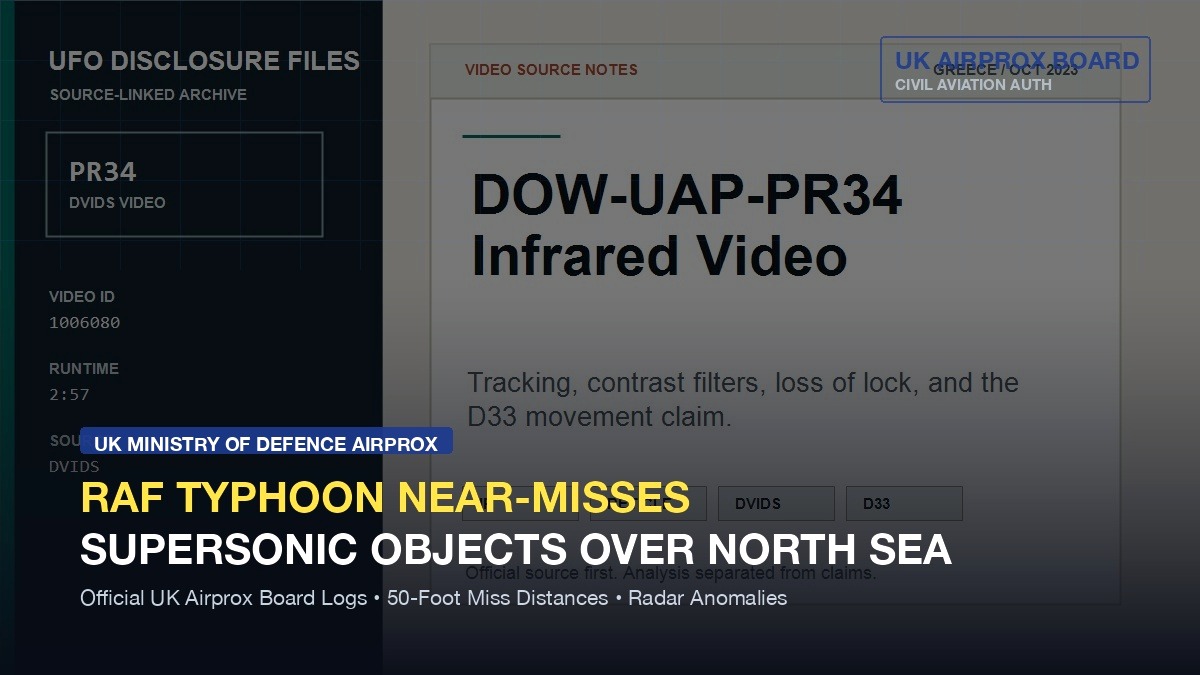
- RAF Typhoon Intercepts: British fighter scrambles over the North Sea tracking supersonic targets that vanished from radar without creating sonic booms.
- Canadian Maritime Helicopter Logs: Royal Canadian Navy helicopter crews recording illuminated submerged objects pacing surface frigates in the North Atlantic.
- Royal Australian Air Force (RAAF) Tracking: High-altitude radar records of luminous craft maneuvering over the Woomera missile test range in South Australia.
International Declassification Momentum and the PURSUE Archive
The multilateral data-sharing framework has created unprecedented momentum for open-source international declassification.
- Synchronized Public Disclosures: Aligning War.gov/UFO releases with upcoming declassifications from the UK National Archives and Library and Archives Canada.
- Scientific Ingestion for Allied Universities: Releasing calibrated telemetry to vetted international academic consortia for non-military peer review.
- The Strategic Outlook for Tranche 08: Future PURSUE batches slated to incorporate primary sensor recordings contributed directly by allied defense ministries.
What to take from it
- Declassified defense memoranda confirm the Five Eyes alliance has established a permanent UAP intelligence data-sharing working group.
- Global sensor networks—including UK phased-array radars, Canadian NORAD sectors, and Australian over-the-horizon radars—are fused into a unified tracking grid.
- Allied partner nations officially adopted the standardized Five Observables rubric to classify anomalous performance.
- The international framework is driving synchronized multilateral declassifications, establishing a global empirical foundation for UAP research.
Read next
- RAF Typhoon jet near-misses briefing - allied military aviation near-collision sensor records
- FY 2026 NDAA NORAD mandate - statutory requirements compelling multi-domain radar unsealings
- Navy Mariana Trench USO hydrophone records - declassified naval tracking of transmedium underwater craft
- PURSUE Release 07 master hub - complete directory of the latest 28 declassified federal records
Source trail
The strongest reading starts with the primary record, then follows the supporting documents, dates, agency labels, and public statements around it. When commentary or reporting adds context, it is weighed against the source record instead of being treated as the record itself.