Briefing
General Neil McCasland Case: Wright-Patterson AFRL & UFO Files
Executive Summary
The perplexing disappearance of retired U.S. Air Force Major General William Neil "Neil" McCasland has refocused intense national and investigative interest on one of the most consequential yet opaque figures in modern military aerospace intelligence. McCasland, who served as Commander of the Air Force Research Laboratory (AFRL) at Wright-Patterson Air Force Base and Director of Space Programs in the Office of the Assistant Secretary of the Air Force for Acquisition, held top-tier Special Access Program (SAP) clearances governing the nation's most advanced aerospace research. For decades, Wright-Patterson AFB has stood as the historic epicenter of military crash retrieval lore and exotic foreign technology exploitation, housing the National Air and Space Intelligence Center (NASIC) and the lineage of the Foreign Technology Division (FTD).
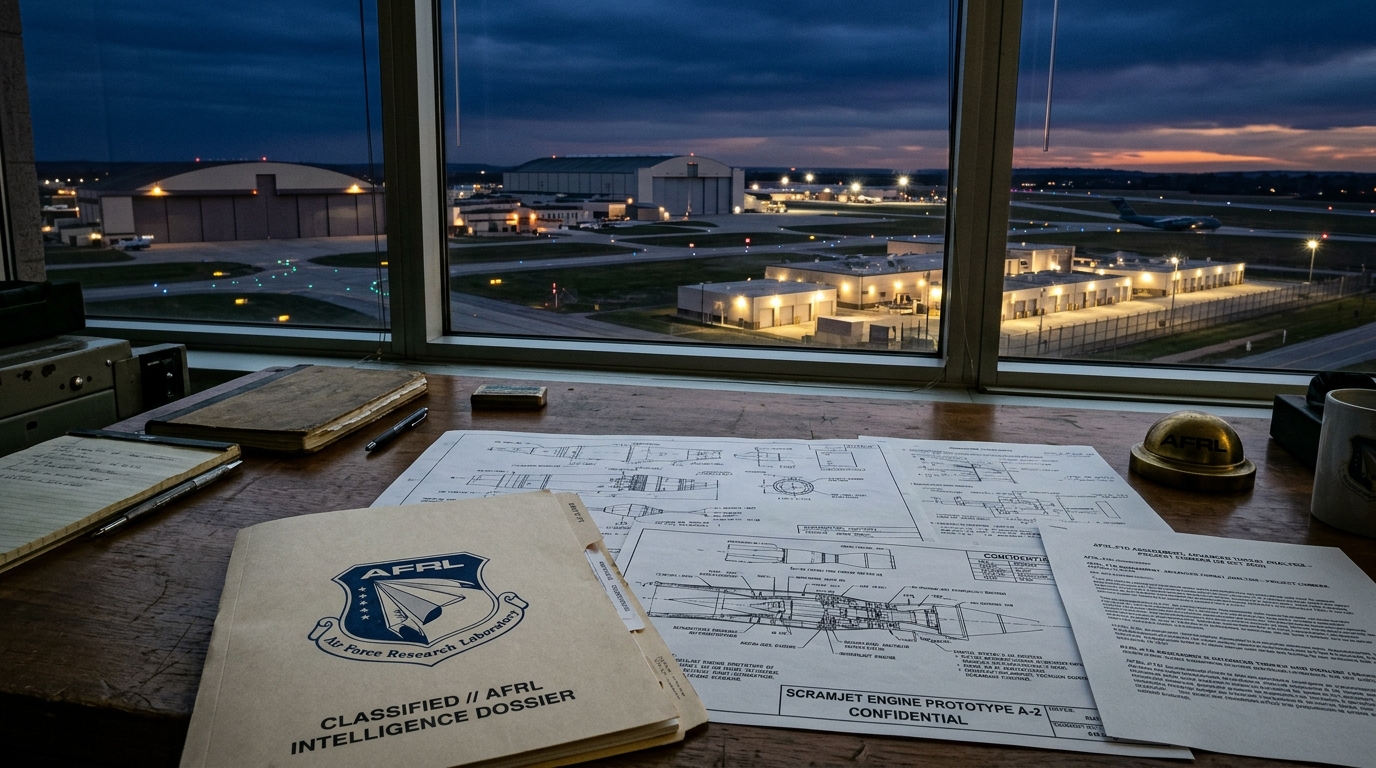
Special Access Programs & Crash Retrievals
The official player loads only after selection. The source link remains available for direct verification.
What to know
McCasland first entered wider public consciousness when hacked 2016 emails between aerospace researchers and former White House Chief of Staff John Podesta named the general as a critical Pentagon insider knowledgeable about advanced materials recovered from anomalous aerospace craft. As congressional committees prepare new contractor subpoenas, unsealed defense dossiers provide context regarding McCasland's career, the organizational architecture of AFRL materials science divisions, and the strict classification walls erected around unconventional aerospace technologies.
The Commander of AFRL: Overseeing Wright-Patterson's Science Engine
Major General McCasland's military career placed him at the pinnacle of military technology acquisition and directed energy development.
- Steward of a $4 Billion Budget: From 2011 to 2013, McCasland commanded the Air Force Research Laboratory at Wright-Patterson, directing the Air Force's science and technology program across nine directorates.
- Special Access Oversight: McCasland served as Director of Special Programs in the Office of the Under Secretary of Defense for Acquisition, Technology and Logistics, granting him oversight across Waived-Unacknowledged SAPs.
- MIT Astronautical Doctorate: Holding a Ph.D. in astronautical engineering from MIT, McCasland was an elite technical authority specializing in space structures, control systems, and directed energy applications.
The Podesta Leaks & The Materials Science Connection
Unsealed aerospace correspondence directly linked General McCasland to sensitive discussions surrounding recovered craft materials.
- The 2016 Aerospace Disclosures: In unsealed communications with John Podesta, Blink-182 founder Tom DeLonge and aerospace consultants identified McCasland as the military official actively advising efforts on anomalous aerospace material disclosures.
- The Wright-Patterson Foreign Technology Heritage: The emails referenced McCasland's role at the base that historically analyzed foreign and anomalous crash debris dating back to Project Sign, Project Grudge, and the Foreign Technology Division (FTD).
- Metamaterials & Advanced Composites: The discussions focused on alleged engineered terahertz waveguides and multi-layered bismuth-magnesium materials examined by military contractors.
The Ongoing Search in the Sandia Mountains
The personal mystery surrounding the retired general has ignited renewed scrutiny across defense and intelligence circles.
- Disappearance in Albuquerque: On February 27, 2026, the 68-year-old retired general walked away from his residence in northeast Albuquerque, New Mexico, leaving his vehicle, phone, and identification behind.
- Proximity to Sandia & Kirtland: Search operations coordinated by the Bernalillo County Sheriff's Office and federal partners focused on the rugged Sandia Mountain foothills, directly adjacent to Kirtland Air Force Base and Sandia National Laboratories.
- Official Search and Rescue Status: Law enforcement has consistently emphasized that the operation remains an active search and rescue mission with no evidence of foul play, while noting his deep outdoor experience in the Sandia wilderness.
Why Wright-Patterson Remains the Core of UAP Scrutiny
Congressional efforts to force UAP transparency repeatedly trace institutional custody to the facilities McCasland once led.
- House Oversight SCIF Inquiries: Members of the House UAP Caucus, including Reps. Tim Burchett and Anna Paulina Luna, have repeatedly targeted Wright-Patterson AFB facilities for classified on-site briefings.
- National Air and Space Intelligence Center (NASIC): NASIC's role as the premier exploitation agency for foreign aerospace threats positions it as the natural gatekeeper of unacknowledged retrieval files.
- The PURSUE Transparency Mandate: As the Department of War continues its declassification releases, McCasland's legacy reflects the complex intersection between legitimate military secrecy and the public's demand for unvarnished aerospace truth.
What to take from it
- Retired Maj. Gen. William Neil McCasland, former AFRL commander at Wright-Patterson AFB, remains missing following an active search in New Mexico.
- McCasland held elite top-tier security clearances overseeing Air Force special access programs and advanced materials science.
- Unsealed 2016 correspondence linked McCasland to private aerospace discussions regarding recovered non-conventional materials.
- Wright-Patterson AFB houses NASIC and the historical Foreign Technology Division, long scrutinized by congressional UAP investigators.
- The case highlights the profound security firewalls surrounding military aerospace laboratories and exotic materials programs.
Read next
- Congressional UAP Caucus Select Committee push - efforts to subpoena defense contractors and aerospace facilities
- Defense contractor SCIF subpoenas investigation - subpoenas targeting aerospace special access programs
- AAWSAP contract files and DIA technical reports - advanced aerospace weapon system application studies
- PURSUE database 480 files audit - federal archive structure and declassified intelligence
Source trail
The strongest reading starts with the primary record, then follows the supporting documents, dates, agency labels, and public statements around it. When commentary or reporting adds context, it is weighed against the source record instead of being treated as the record itself.